Car Insurance
Should I buy an electric car now or wait?

The UK is moving towards electric cars, but it’s not as simple as headlines suggest.
Around 1 in 4 new cars sold in the UK are now fully electric, up from roughly 1 in 10 just a few years ago. At the same time, the government has committed to ending the sale of new petrol and diesel cars by 2030, with all new cars zero-emission by 2035.
So the direction is set. But the experience of owning an electric car still depends heavily on your situation. For some drivers, it already makes complete sense. For others, there are still practical reasons to wait.
Reasons to buy an electric car now
Lower running costs
This is the strongest argument today, and it’s grounded in real usage rather than theory.
Charging at home is usually significantly cheaper than petrol or diesel, especially if you’re on an off-peak tariff. Over a year, that difference can be substantial for regular drivers.
Maintenance is another factor. Electric cars don’t need oil changes and have fewer components that wear out. Brake wear is reduced due to regenerative braking. Over time, these are tangible savings, not marginal ones.
The key condition is simple: this works best if you charge at home. If you rely on public rapid charging, costs can rise quickly and narrow the gap with petrol.
More choice in the UK market
The market has changed quickly, largely because it’s being forced to.
Under the UK’s Zero Emission Vehicle (ZEV) mandate, manufacturers must sell an increasing proportion of electric vehicles each year. That’s driving a rapid expansion in available models.
Where electric once meant compromise, you now have genuine equivalents to petrol cars across most categories. That reduces risk for buyers. You’re not an early adopter anymore, you’re part of a growing mainstream.
Home charging convenience
If you have off-street parking, this is often the tipping point.
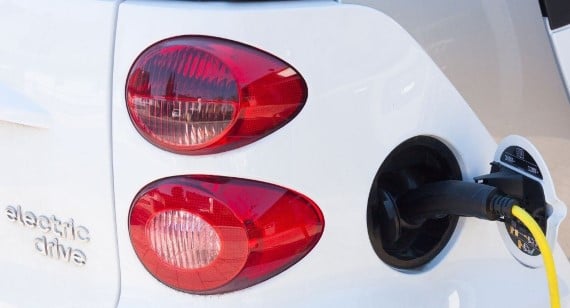
You stop planning around fuel. You plug in overnight and start the day with a full battery. For most drivers, that’s more convenient than visiting a petrol station.
It also changes how you think about range. When you have the reassurance of being able to charge your car at home overnight, the day-to-day anxiety largely disappears.
Environmental benefits
Electric cars produce no tailpipe emissions, which makes a measurable difference to air quality, particularly in towns and cities.
Over their lifetime, electric cars are generally considered to have a lower environmental impact than internal combustion engine (ICE) cars, even including battery production. In everyday use, especially in urban areas, EVs reduce local pollution in a way petrol and diesel vehicles cannot.
Future-proofing (2030 petrol/diesel phase-out)
This is no longer speculative policy.
The UK government plans to end the sale of new petrol and diesel-only cars by 2030, with hybrids allowed until 2035 before a full transition to zero-emission vehicles.
That has real implications:
- Manufacturers are prioritising electric vehicle development
- Infrastructure investment is focused on vehicle charging
- Policy and taxation are gradually shifting in favour of renewable electricity
Buying now means aligning with that direction rather than delaying a change you’re likely to make later anyway.
Reasons you might want to wait
Higher upfront cost
This remains the biggest barrier, and it’s a valid one.
Even as prices fall, electric cars can be more expensive to buy than petrol equivalents. While running costs can offset that over time, the initial outlay may still be higher.
If buying an electric car means stretching your finances, the overall benefit can quickly disappear. In that situation, waiting for prices to fall further is a rational decision.
Public charging limitations
The UK’s charging network is growing quickly, with tens of thousands of public charge points now installed. But access is uneven.
In cities, coverage has rapidly improved in recent years. In rural areas, it can still be limited. Reliability and queuing can also be an issue on busy routes.
If you can’t charge at home, your experience depends heavily on local infrastructure. That’s not something to overlook.
Rapid improvements in battery tech
Battery range, charging speed and efficiency are all improving.
If you buy now, you’re buying into a market that will likely look better in a few years. That doesn’t make current cars obsolete, but it does mean future models may offer better value.
For some buyers, that’s enough reason to wait.
Depreciation concerns
Resale value is less predictable than it is for petrol cars.
As new models with longer ranges and better technology enter the market, older EVs can lose value more quickly. This is particularly true for earlier generations with shorter range.
The used electric vehicle market is growing, and rising fuel costs are driving increased demand, however, depreciation is still a factor to consider.
Key questions to help you decide
Can you charge at home?
This is the single most important factor.
If you can charge at home, ownership is simpler and usually cheaper. If you can’t, you’ll rely on public charging, which changes both cost and convenience.
What is your typical daily mileage?
Most UK drivers travel relatively short distances each day. For this kind of use, an EV is usually more than capable.
The decision becomes more complex if your mileage is high or unpredictable, although electric vehicle battery ranges are increasing.
Do you regularly take long journeys?
Long trips are increasingly manageable in electric cars, but they still require planning around charging stops.
If you regularly drive long distances and want complete flexibility, a petrol or hybrid may still feel more practical for now.
What is your budget?
Look at the full picture, not just the purchase price.
Consider:
- Fuel savings
- Maintenance costs
- Insurance
- Depreciation
An electric car can be cheaper overall, but only if the upfront cost is manageable.
Do you live in a rural or urban area?
Location affects everything from charging access to driving patterns.
Urban drivers often benefit from better infrastructure and shorter journeys. Rural drivers may depend more on home charging and face longer gaps between charge points.
How much does it cost to own an electric car in the UK?
Purchase price vs petrol cars
Electric cars still tend to cost more upfront, although the gap is narrowing as competition increases and more models enter the market.
You are paying more at the point of purchase, but that’s only one part of the overall cost.
Running costs (charging vs fuel)
Home charging is usually cheaper than petrol or diesel, particularly on off-peak tariffs.
Public charging is different. Rapid chargers, especially on motorways, can be significantly more expensive. Your real-world costs depend heavily on how and where you charge.
Insurance costs
Insurance can be slightly higher for electric cars, largely due to the cost of batteries and repair costs.
That said, cover is evolving quickly as electric vehicles become more common. What matters is understanding what is included and how it differs from a standard policy.
Is the UK ready for electric cars?
The UK is part-way through the transition.
Electric vehicle adoption is rising quickly, and the number of public charge points continues to increase year on year. Manufacturers are investing heavily, and government policy is firmly pushing towards zero-emission vehicles.
But it’s not uniform.
For drivers with home charging and predictable journeys, the UK is already ready. For those without easy access to charging, particularly in less well-served areas, it’s still catching up.
So, should you buy an electric car now or wait?
Buy now if:
- You can charge at home
- Your driving is predictable
- You want to reduce running costs today
Wait if:
- You rely on public charging
- The upfront cost is a stretch
- You want to see how technology and prices develop
The market is moving towards electric, but it hasn’t removed the need to choose carefully. The right decision depends on how you actually use your car, not just where the industry is heading.