Investing, Pensions and Finance
Six allowances and exemptions to think about now

The new tax year has started, so it’s the ideal time to think about your finances and make sure you’re not missing out on some of the valuable allowances and exemptions you’re entitled to. By taking proactive steps now and making any necessary changes, you could help to ensure your financial plans are on track to help achieve your objectives.
1. Get an ISA
Everyone aged 18 or over has an allowance of £20,000 to put into an ISA (Individual Savings Account) each tax year. You can put that £20,000 into a Stocks and Shares ISA, a Cash ISA, or a mix of both. Whichever combination you choose, you won’t pay any UK Income Tax or Capital Gains Tax on any growth your investment generates.
If you already have an ISA and your income has increased, or you have disposable income, it’s worth checking the amount you’re investing is in line with your long-term financial goals.
If you have eligible children, you can also invest up to £9,000 per child in a Junior ISA each tax year. This is in addition to your own ISA allowance. A Junior ISA is a great way to give your children a head start – perhaps by lending a hand with the rising cost of university or helping them to get on the property ladder. Just be aware that only a parent or legal guardian can open a Junior ISA for their children.
2. Pay into your pension
For every £80 you pay into your pension, HMRC will add an additional £20. If you pay 40% or 45% Income Tax, you may be able to reclaim additional tax relief through your tax return.
Most people who are aged under 75 can contribute to their pension up to the level of their earnings, capped at £60,000 each tax year, and receive tax relief. You may be able to pay more in if you have unused allowances from the previous three years. You can also continue to pay into your pension even after you’ve retired.
Providing you’re under 75, if you don’t have any earnings, you can pay in up to £2,880 each tax year to which HMRC will add a further £720. You could also consider setting up a pension for a child or grandchild. You can invest up to £2,880 per child each year, and HMRC will top this up with a further £720, resulting in a total annual investment of £3,600.
3. Use your Capital Gains Tax allowance
Capital Gains Tax (CGT) can be payable when you sell or give away assets that have increased in value during the time you’ve owned them. In the current tax year, you have a tax-free capital gains allowance of £3,000. Any gain above this amount is added to your income, any part that falls in the basic rate band is charged at 18% and any excess at 24%.
There is no Capital Gains Tax on assets transferred between spouses or civil partners, so if you’re thinking about selling or giving away assets, it can make sense to transfer assets between you to take advantage of two £3,000 tax free allowances and potentially a lower tax rate.
If you hold shares, an NFU Mutual Select Investment Plan or other collective investment, it’s important to review them regularly, as using your annual Capital Gains Tax allowance can help reduce any future tax bill.
4. Be aware of your dividend allowance
Dividends are payments made to shareholders from company profits after Corporation Tax. If you receive a dividend, you won’t have to pay tax on any dividend income that falls within your Personal Allowance. (Your Personal Allowance is the amount of income you can earn each tax year without paying tax – the standard Personal Allowance is currently £12,570).
You also get a dividend allowance each tax year. You can use your dividend allowance if you have share based collective investments, such as our Select Investment Plan. The dividend allowance for the 2026-27 tax year is £500.
5. Get up to speed with Inheritance Tax
Inheritance Tax (IHT) is a tax on your estate when you die. The first £325,000 is normally tax free, as is up to £175,000 of the value of your home if left to a ‘direct descendent’. There is no Inheritance Tax to pay on any amount left to your spouse or civil partner. If both amounts have not not been used when the first person in a marriage or civil partnership dies, the unused part can be transferred to the surviving spouse or civil partner.
If you have a farm or qualifying business, Agricultural Property Relief (APR) and Business Property Relief (BPR) can help reduce any IHT payable.
As of 6th April 2026, the combined value of APR and BPR that qualifies for 100% relief (meaning that no IHT is payable) will be limited to £2.5 million per person. Any unused part of the £2.5 million allowance on the death of a spouse/civil partner is transferable to a surviving spouse/civil partner. A couple will be able to pass on up to £5 million of qualifying agricultural or business assets between them. For qualifying assets above this limit, relief will reduce to 50%, so half their value will be exempt from IHT, while the remainder will be included in the calculation.
Currently, pensions are normally considered to be outside your estate and are usually free of IHT. However, from April 2027, most unspent pension funds will be included in the Inheritance Tax calculation on death.
IHT can be complex, so it’s important to take advice based on your own circumstances.
6. Be generous
You can give away a total of £3,000 worth of gifts each tax year and unlimited regular gifts out of income which doesn't impact your normal standard of living, immediately exempt from IHT.
If you make a gift to charity under Gift Aid, the charity can claim £25 for every £100 you give. If you’re a higher rate taxpayer paying 40% tax you can then also claim back 20% of the total, enabling you to reclaim £25 on that donation via your self-assessment tax return. Just be aware that this only applies to lifetime gifts, not on gifts you give on death. Gifts left to charity on death are normally exempt from IHT.
The value of investments can rise or fall and you may get back less than invested.
The tax treatment of pensions and ISAs depends on your individual circumstances and may change in the future.
NFU Mutual Financial Advisers advise on NFU Mutual products and selected products from specialist providers. When you contact us we'll explain the advice services we offer and the charges. Financial advice is provided by NFU Mutual Select Investments Limited.
Please note that Inheritance Tax advice is not regulated by the Financial Conduct Authority or the Prudential Regulation Authority.
Looking for financial advice?
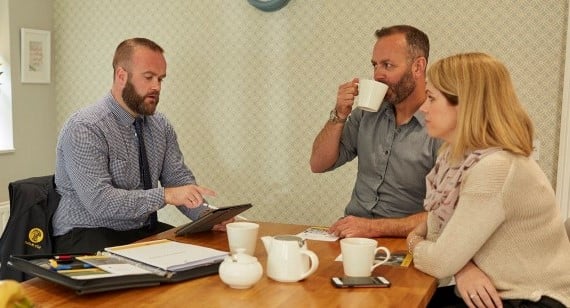
If you’d like some advice on your investments, one of our NFU Mutual Financial Advisers can help. They'll be able to recommend products that are right for you based upon your personal circumstances. You can book an appointment with an NFU Mutual Financial Adviser by either calling: 0800 622 323 or requesting a call back.
What's next?
Find out more
Want to know more about our ISAs and pensions?
Call: 0800 622 323