Motoring
Are electric cars practical in rural areas?
Electric cars are often associated with city driving, short commutes, and easy access to public charging. But a large part of the UK doesn’t fit that picture. Rural drivers tend to travel further, rely more on their cars and have fewer nearby services.
So are electric vehicles (EVs) actually practical in rural areas? The answer is yes for many people, but it depends on how and where you drive, and how well your setup fits your lifestyle.
What it’s really like to own an electric car in rural areas
Owning an electric car in a rural setting feels different to urban EV ownership. You’re less likely to rely on public charging and more likely to depend on your own home setup. Journeys are often longer, roads are less congested and driving speeds are higher.
For many rural drivers, that can actually suit an EV well. You avoid stop-start traffic, benefit from consistent speeds and can charge overnight ready for the next day. But the trade-off is that when you do need public charging, it’s often further away.
Are electric cars suitable for long rural commutes?
How far can you commute in an electric car?
Most modern EVs comfortably cover 250 to 300 miles on a full charge, depending on the model with several models now exceeding 400 miles. That means even relatively long rural commutes are well within reach.
For example, a 70 or 80 mile round trip is easily manageable for most EVs, even allowing for colder weather and real-world driving conditions. A 100 mile daily commute is also realistic, particularly if you can charge at home overnight.
Real examples: 70, 80 and 100 mile commutes
A driver covering 70 miles per day might only use around a third of a typical battery. At 80 miles, you’re still well within a comfortable margin. Even at 100 miles, most newer EVs can handle the journey without needing to recharge during the day.
The key is consistency. Rural commutes tend to be predictable, which makes EV ownership easier to plan around.
How driving conditions affect range in rural areas
Rural driving often involves higher speeds, hills and fewer opportunities for regenerative braking. That can reduce efficiency compared to city driving.
Cold weather can also have a noticeable impact on range, particularly in exposed rural areas. Factoring in a buffer is important, especially in winter.
Charging an electric car in rural areas
Home charging: the biggest advantage for rural drivers
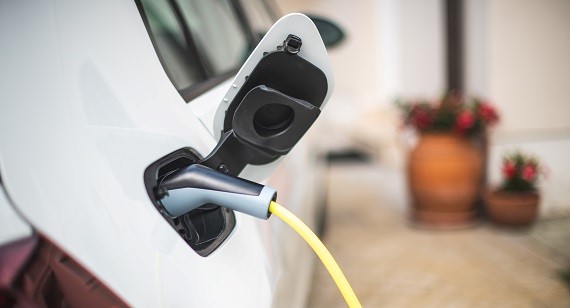
For most rural EV owners, home charging is what makes the whole thing work. Being able to plug in overnight and start each day with a full battery removes much of the uncertainty around range.
In many ways, rural drivers are better positioned here than urban ones, as they’re more likely to have off-street parking.
Public charging challenges in rural locations
Public charging infrastructure is improving, but coverage is still uneven. Rural areas often have fewer rapid chargers, and they may be further apart.
This doesn’t make EV ownership impractical, but it does mean you need to plan longer journeys more carefully.
Planning longer journeys from rural areas
If you regularly travel beyond your typical range, route planning becomes part of the routine. Most modern EVs and apps help with this, identifying charging points along the way.
It’s less about spontaneity and more about knowing your options in advance.
Understanding the 20–80 rule for EV charging
What the 20–80 rule means
The 20–80 rule refers to keeping your battery charge between roughly 20% and 80% for day-to-day use. This helps preserve long-term battery health and ensures more efficient charging.
Why it matters more for rural drivers
For rural drivers covering longer distances, this rule becomes more relevant. You’re more likely to use a larger portion of the battery each day, so understanding how to manage charge levels helps balance range and longevity.
How to apply it to daily commuting
In practice, many drivers charge to around 80% overnight and top up when needed. On longer journeys, charging beyond this range is sometimes necessary, but for everyday use, staying within that window is a sensible approach.
Range and battery considerations for rural driving
How terrain, weather and speed affect range
Hilly terrain, higher speeds and colder temperatures all reduce range. Rural drivers are more exposed to these factors, so real-world range will often be lower than official figures.
Building in a margin of safety helps avoid issues, particularly on longer or less predictable journeys.
Battery performance in colder rural climates
Cold weather affects battery efficiency and charging speed. In rural parts of the UK, where winters can be harsher and journeys longer, this becomes more noticeable.
Preconditioning the battery and charging at home can help offset some of these effects.
Choosing a realistic range for your lifestyle
The best approach is to choose an EV with more range than you think you need. That gives flexibility for detours, weather changes and unexpected trips without adding stress.
Benefits of electric cars for rural drivers
Lower running costs over long distances
Rural drivers often cover more miles, which is where EVs can make a difference. Electricity is typically cheaper than petrol or diesel per mile, especially if you charge at home.
Over time, those savings can add up.
Convenience of starting every day fully charged
Unlike a petrol car, you don’t need to make regular trips to a filling station. Charging overnight means your EV is ready to go each morning.
For rural drivers, that convenience is a genuine advantage.
Quiet driving and suitability for rural roads
EVs are quieter and smoother to drive, which suits country roads well. It’s a different driving experience, but one many people quickly get used to.
But it also means walkers, horse riders and cyclists may not hear you approaching, especially on narrow rural lanes - so extra awareness is important.
Challenges of owning an EV in rural areas
Limited public charging infrastructure
The biggest challenge remains access to charging away from home. While improving, rural infrastructure still lags behind urban areas.
Fewer nearby repair and servicing options
EV servicing requires specialist skills and equipment. In rural locations, you may need to travel further for repairs or diagnostics.
Range anxiety on longer or irregular journeys
Even if your daily driving is well within range, occasional long trips can still cause concern. Planning and familiarity help, but it’s a factor worth considering.
How insurance and breakdown cover work for rural EV drivers
What happens if you run out of charge in a remote area
Running out of charge isn’t common, but it can happen, particularly on unfamiliar routes. In rural areas, where services are more spread out, recovery can take longer if you’re not properly covered.
The role of breakdown cover and recovery
NFU Mutual’s car insurance includes RAC breakdown cover as standard for electric cars. This includes assistance if you run out of charge. The RAC’s EV Boost vans can give you up to 10 miles of power, helping you reach a suitable charging point or arranging recovery (up to 20 miles) where needed. This applies to electric cars only. Electric vans and other EV types may require different cover.
That kind of support is particularly important in rural settings, where the nearest charger may not be close by.
What to check in an EV insurance policy
Electric vehicle insurance should reflect the specific needs of EV drivers. With NFU Mutual, cover includes the battery and charging equipment such as cables and home chargers, alongside comprehensive protection for the vehicle itself.
Making sure these elements are included helps ensure you’re covered for the realities of rural EV ownership.
Choosing the best electric car for rural living
Range and battery size considerations
For rural use, range matters more than it might in a city. A larger battery provides flexibility and reduces the need for mid-journey charging.
Charging speed and compatibility
Faster charging capability can make a big difference on longer trips. It’s also worth checking compatibility with different charging networks.
Practical features for rural conditions
Ground clearance, comfort over longer distances and reliability in varied weather conditions are all worth considering when choosing a vehicle.
Charging infrastructure is expanding, and more rural locations are being included in rollout plans. At the same time, battery technology continues to improve, offering greater range and durability.
As adoption increases, support networks, servicing options and overall accessibility are improving too. What felt restrictive a few years ago is becoming far more manageable.
Key questions to decide if an EV suits your rural lifestyle
If you can install a home charger, you’ve already solved one of the biggest challenges of EV ownership.
Your typical weekly mileage is another key factor. If your regular journeys sit comfortably within an EV’s range, day-to-day use is straightforward.
It’s also worth thinking about how often you make longer trips and whether you’re comfortable planning charging stops when needed.
Final verdict: are electric cars a good choice for rural areas?
EVs can work very well in rural areas, particularly for drivers with predictable journeys and access to home charging.
They offer lower running costs, a simpler driving experience and fewer routine maintenance demands.
With the right setup, and the right insurance and breakdown cover in place, an EV is an increasingly practical option for rural life.